Communities of Color
Facts and insights on specific racial/ethnic groups at the Academy Awards
Kevin Winter/Getty Images
Communities of Color at the Oscars®
In addition to examining all underrepresented individuals nominated for an Academy Award®, it was also important to understand the prevalence of nominees and winners from specific racial/ethnic groups. By disaggregating the data, we provide a deeper exploration of how different communities are represented at the Oscars®.
While in other sections we provided information on individuals who were multiracial/multiethnic, in this analysis we included those people in every group with which they identified. Consistent with how we have evaluated race/ethnicity for other categories on this site, the information we obtained on racial/ethnic identification from online sources was used to guide the classification of people into the following groups. Some choices might be controversial, as they may not align with how an individual person identifies but draw on information about a person’s ancestry. In other words, the family history or origins of some nominees may lie in a group with which they do not identify. Until we hear from individuals directly, we have included people in all of the groups that their ancestry or family history might suggest are appropriate. If anything, this increases the percentage or number of nominees per group and actual estimates may be lower.
Black/African American Nominees & Winners
Only 2% percent of all nominees and 2% of all winners from 1929 to 2026 at the Academy Awards® were Black. This represents 289 nominations and 63 winners in 98 years.
Nominees
- There have been 36 years with no Black nominees at the Academy Awards® across the 19 categories we analyzed. The most recent year was 2001. There were 19 years with only one Black nominee. Most recently, that year was 2011.
- 2021 was the year with the highest percentage of Black nominees. The 24 nominations for Black artists that year were 12% of all nominations.
- Four categories accounted for 36% or 105 of the 289 Black nominees across 98 years. These are the acting categories (Best Actor/Actress in a Leading/Supporting Role).
- Of the 15 nominations for Black women in the Best Actress in a Leading Role category, only two women have been nominated more than once in this category: Viola Davis (2012, 2021) and Cynthia Erivo (2020, 2025).
- Of the 35 nominations for Black women in the category of Best Actress in a Supporting Role, two women have received more than one nomination: Octavia Spencer (2012, 2017, 2018) and Viola Davis (2009, 2017). Each has won the award once.
- Denzel Washington has been nominated 7 times for Best Actor in a Leading Role (1993, 2000, 2002, 2013, 2017, 2018, 2022), with one win. Only four other actors have been nominated more than once: Morgan Freeman (1990, 1995, 2010), Will Smith (2002, 2007, 2022), Sidney Poitier (1959, 1964), and Colman Domingo (2024, 2025).
- Eighteen percent of Black nominees–53 in total–appeared in one category: Best Original Song.
- There have only been two Black nominees for Best Animated Film. They were Peter Ramsey in 2019 and Kemp Powers in 2024.
- One Black woman (Joi McMillon, 2017) and one Black man (Hugh A. Robertson, 1970) were the only Black nominees for Best Editing.
- Of the 20 Black nominees for Best Picture, three were women (Oprah Winfrey, Kimberly Stewart, Zinzi Coogler). No Black woman has won the award. Only two Black nominees have been nominated twice for Best Picture: Jordan Peele (2018, 2019), and Ryan Coogler (2021, 2026).
- Seven percent of nominees in 2026 were Black. Of these 15 nominees, 4 were nominated in acting categories.
Winners
- There have been 68 years where no Academy Award® winners were Black. The most recent year was 2020.
- A Black nominee has never won the Oscar® for Best Directing, Best Cinematography, Best Editing, or Best Visual Effects. In 2026 both the best directing and the best cinematography categories have one black nominee. The nominee for best cinematographer is the first woman of color ever nominated for this role.
- Thirty-eight percent of all 63 Black winners appeared in the four acting categories.
- Black winners in the Best Song category accounted for 19% or 12 of all Black Oscar® winners.
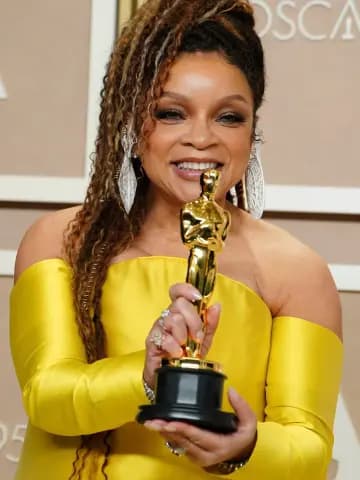
- Ruth E. Carter is the only Black woman to win in the category of Best Costume Design (2019, 2023). Paul Tazewell is the only Black man to win for Best Costume Design, which he did in 2025.
- The only Black winners in the Best Makeup & Hairstyling categories were Mia Neal and Jamika Wilson. They won in 2021.
- Three Black men have won an Oscar® for Best Original Score: Prince (1985), Herbie Hancock (1987), and Jon Batiste (2021).
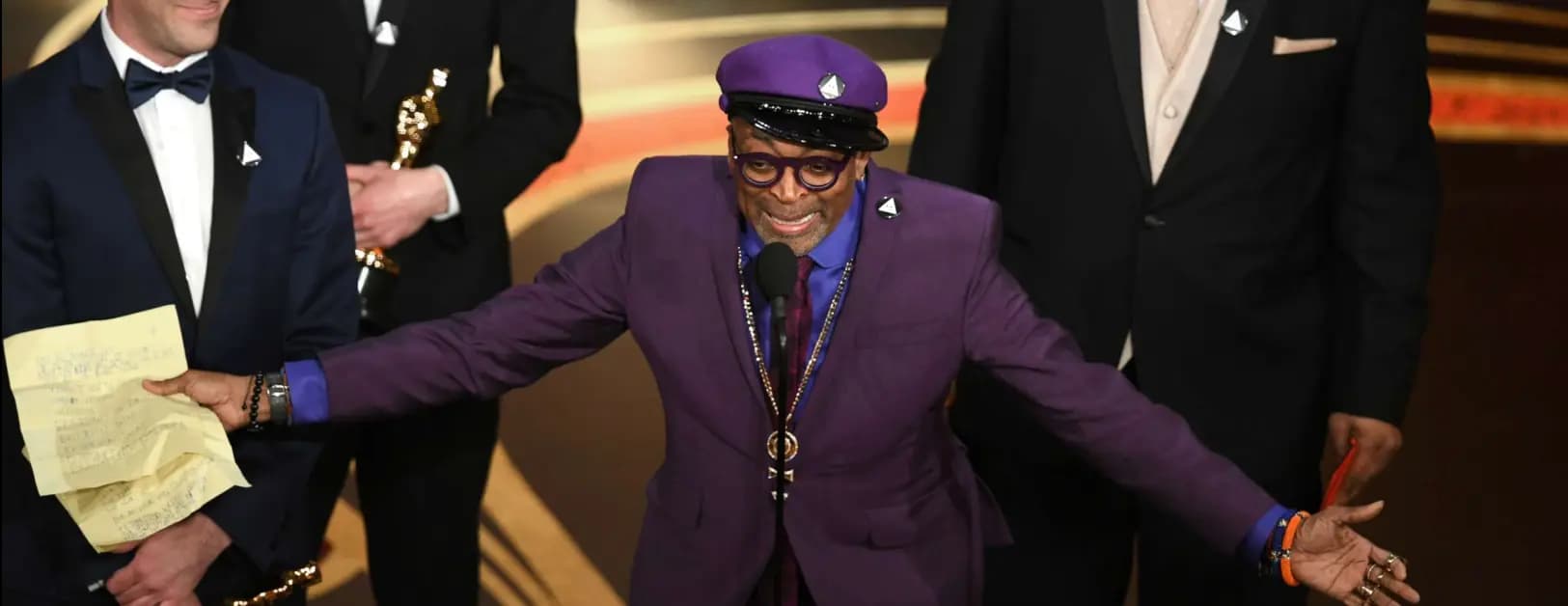
- The seven Black winners in the Best Adapted Screenplay category won for 5 different movies. Each won their award in or after 2010. All were men: Geoffrey Fletcher (2010); John Ridley (2014); Barry Jenkins (2017); Tarell Alvin McCraney (2017); Kevin Willmott (2019); Spike Lee (2019); Cord Jefferson (2024).
- There was a 62-year gap between the two wins for a Black nominee in Best Production Design (Malcolm Brown, 1957; Hannah Beachler, 2019).
- In both 2019 and 2021, seven Black nominees won an Academy Award®. This was the highest number of Black winners across any other year. The two years combined account for almost a quarter of all Black winners.
- Of the 29 years with a Black winner, almost half (12) saw only one Black nominee receive the Oscar®. This was most recently the case in 2023, when Ruth E. Carter was the only Oscar winner.

Hispanic/Latino Nominees & Winners
Across all 98 years of nominees, 2% or 273 have been Hispanic/Latino. Similarly, 2% or 59 winners have been Hispanic/Latino.
Nominees
- There were 32 years with no Hispanic/Latino nominees at the Academy Awards®. The most recent year was 2002.
- The most nominations for Hispanic/Latinos occurred in 2007. That year, 17 nominations went to Hispanic/Latinos– 11% of all nominations. Of those 17 nominations, 15 of those nominations went to 3 films: Pan’s Labyrinth (7 nominations), Babel (5 nominations), and Children of Men (3 nominations).
- Nearly two-thirds of all nominations for Hispanic/Latinos have occurred since 2003. That was the first year Alfonso Cuarón was nominated.
- Fifty nominations, or 18% of the total for Hispanic/Latinos have been in the four acting categories (Best Actor/Actress in a Leading/Supporting Role).
- The 28 nominees for Best Sound are accounted for by 14 people. Frank A. Montaño has been nominated 9 times in this category but has never won. There have been four Hispanic/Latinas nominated for Best Sound. Michelle Couttolenc is the only Hispanic/Latina woman to win the award.
- The largest percentage of Hispanic/Latino nominees appeared in the Best Animated Film category. Nine percent of all nominees or 21 Hispanic/Latino artists were nominated for this award.
- In 2026, 7% of all nominations were given to Hispanic/Latinos.
Winners
- There have been 62 years without any Hispanic/Latino Oscar® winners, including most recently in 2011, 2012 and 2024.
- Nineteen percent (11) of all wins for Hispanic/Latino nominees were three men: Alejandro G. Iñárritu, Alfonso Cuarón, and Guillermo del Toro. All are international filmmakers. To put this into perspective, only 15 Oscar® wins have gone to Latinas in 97 years. Two of those wins were awarded to Hilary Swank, who may not even identify with this community according to popular press articles. If we remove Hilary Swank, then only 13 Latinas have won an Oscar - and none have won for Best Actress.
- Of the 35 years with any Hispanic/Latino winners, there were 22 when only 1 Hispanic/Latino won an award. The last year this happened was 2025.
- The categories with the largest share of Hispanic/Latino winners are: Best Production Design (9 wins); Best Makeup & Hairstyling (6 wins); Best Directing (5 wins; to the same three men), and Best Animated Film (5 wins).
- Of the 4 winners for Best Original Screenplay, 3 were associated with the same film (Birdman or (The Unexpected Virtue of Ignorance)): Alejandro G. Iñárritu; Nicolás Giacobone; Armando Bo. Pedro Almodóvdar was the only other Hispanic/Latino winner in this category. Every win for a Hispanic/Latino writer in this category has come in the 21st Century.
- There are three categories where there has never been a Hispanic/Latino winner: Best Adapted Screenplay, Best Documentary Film and Best Actress in a Leading Role (if Hilary Swank is not included). Of those three categories, only Best Adapted Screenplay has a Hispanic/Latino nominee in 2026.

Asian Nominees & Winners
Two percent of all nominees and 2% of winners across 98 years at the Academy Awards® were Asian. This reflects 266 nominations and 64 wins.
Nominees
- There have been 35 years without any Asian nominees at the Academy Awards®. The most recent year when this occurred was 1999. Of the 63 years with an Asian nominee, there were 20 when only 1 Asian nominee appeared. The most recent year was 2010.
- 2026 had the highest number and percentage of Asian nominees– 22 nominations, or 10% of all Asian nominees were named in 2026.
- Eleven nominees were associated with one film (Everything, Everywhere, All at Once). The nominees associated with this film won a total of 6 Academy Awards.
- In 2024, of the 10 nominations for Asian individuals (6% overall), four were in Best Visual Effects and due to one film: Godzilla Minus One.
- There were 7 years with double-digit nominations for Asian nominees: 2001, 2019, 2020, 2021, 2023, 2024, and 2026. Of the 103 nominations to Asian nominees in these years (39% of all nominations), 38 or 37% were accounted for by 4 films: KPop Demon Hunters (8 nominations), Everything, Everywhere, All at Once (11 nominations), Parasite (8 nominations), and Crouching Tiger, Hidden Dragon (11 nominations).
- The largest share of nominations for Asians were in the Best Documentary Feature and Best Animated Film categories. Each category was responsible for 26 nominations - 10% of all Asian nominations.
- There were 24 Asians nominated for Best Cinematographer. Ten of the nominations went to James Wong Howe and occurred between 1939 and 1976.
- Asian actors received only 25 nominations across all four acting categories (Best Actor/Actress in a Leading/Supporting Role). This reflects only 9% of all nominations for Asian nominees across 98 years.
- Only 5 Asian women were nominated for Best Picture, out of 19 total nominations for Asians in this category. The first time an Asian woman was nominated for Best Picture was in 2020.
- Asian nominees appeared in 11 categories in 2026: Best Adapted Screenplay, Best Animated Film, Best Cinematography, Best Costume Design, Best Directing, Best Documentary Film, Best Makeup and Hairstyling, Best Picture, Best Song, and Best Sound.
- Celine Song is only the second Asian woman nominated for Best Original Screenplay. The first was Iris Yamashita (2007). The other 8 Asian nominees in this category were all men.
Winners
- There have been 68 years without any Asian Oscar® winners. The most recent year this occurred was 2017.
- Thirty-three percent of all Asian winners were named in three years: 2020, 2023 and 2024. The 9 Asian winners in 2023 were the most of any year in the 97-year history of the Oscars.
- There has never been an Asian winner in the category of Best Adapted Screenplay. There were no Asian nominees in this category in 2025.
- Two of the three Asian winners for best Original Screenplay won in 2020– both were responsible for Parasite (Bong Joon Ho, Han Jin-won). The third, Daniel Kwan, won in 2023 (Everything Everywhere All At Once).
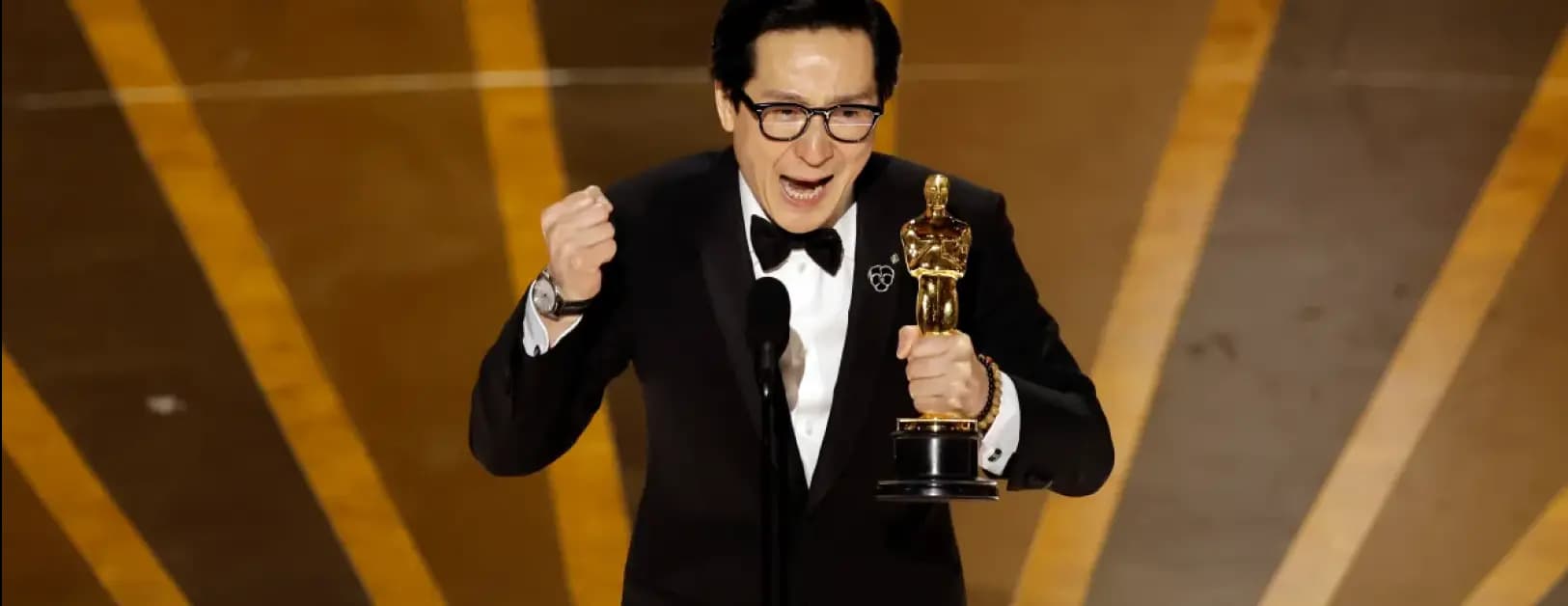
- There have been 7 Asian actors who have won in their categories across 97 years. Two won for Best Actor in a Leading Role (Yul Brynner, Ben Kingsley), 1 won for Best Actress in a Leading Role (Michelle Yeoh), 2 won for Best Actress in a Supporting Role (Miyoshi Umeki, Youn Yuh-jung), and 2 won for Best Actor in a Supporting Role (Haing S. Ngor, Ke Huy Quan).